
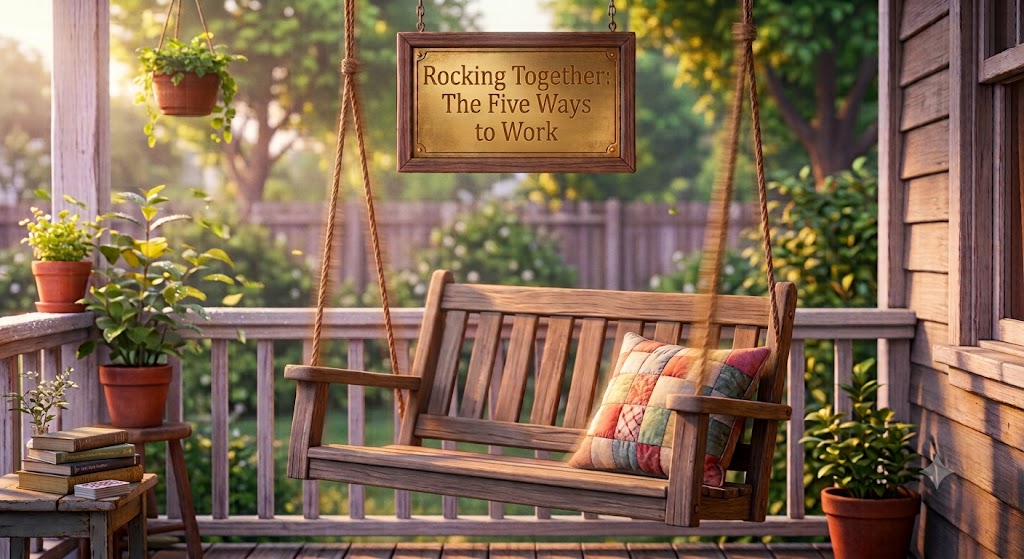
So far we’ve built the container. The High Five, trust, safety, rapport, connection, respect. And we’ve learned how to listen for what actually brought someone to the swing, below the surface, beyond the words on top.
Now the swing starts moving. This is where we talk about the five ways a coaching conversation can rock.
Picture this first, because it’s going to help everything else land.
A porch swing moves in rhythm rather than toward a destination. It rocks, back and forth, staying present rather than arriving. That’s the whole spirit of this module. We’re moving together, and the direction can shift more than once in a single conversation.
The Five Ways
Collaboration. Two people building momentum together, sharing the rhythm rather than one person pushing alone. The client wants to brainstorm, explore, co-create. You’re finding the rhythm side by side. The question underneath it, what can we build together right now.
Action. The moment someone puts a foot down and sends the swing forward with real intention. Structured, directional, accountable. The client already knows where they want to go, and what they need from you is momentum. The question underneath, what will move this forward.
Reflection. Every swing has a moment at the top of the arc where it pauses before it moves again. That pause is where the clarity actually lives. The client needs space to notice a pattern, gently, at their own pace. The question underneath, what’s emerging for you.
Empathy. Sitting close enough that weight gets shared. The client needs to be felt, fully, venting, emotion, being witnessed. The question underneath, what needs care right now.
Education. Like reaching for an apple from the swing, sometimes low hanging, sometimes a real stretch. You reach for something outside yourself, a resource, a framework, a piece of information, and bring it back. The client is looking for something beyond what they can generate on their own. The question underneath, what would you like to learn next.
Five ways, five doors, and you already handed the client this exact menu back in Module 2.
The Skill That Matters Most
This is what separates doing this well from doing it on autopilot.
Your job is to listen for which way the session needs, and then hand that read back to the client.
[COMPOSITE, swap for real story if you have one]
I think about a client. They open a session talking about a decision they’ve been putting off. It sounds like action, they need a plan. And underneath what they’re saying, I’m noticing something else, a kind of tiredness in how they’re telling it, like they’ve said this same story a few times already. So rather than jumping to build a plan with them, I said, it sounds like you might already know what you want to do here, and I’m wondering if what you actually need right now is just a minute to say out loud how tired you are of carrying this decision alone. They got quiet, and then said, yeah, that’s it.
I had a read. I named it, out loud, and let them choose.
One Session, Many Ways
A session moves through more than one way, more often than it stays in just one.
You might open in empathy, because someone needs to just say what’s been sitting on them. Then naturally, once they’ve been heard, they shift into reflection, noticing something about the pattern in what they just said. From there, maybe they move into collaboration, starting to imagine a few different ways forward. And eventually, they land in action, ready to commit to one specific next step.
Four ways, one conversation, each transition led by the client, with you simply staying present and naming what you noticed.
Sometimes a client is looking for education too, a piece of information or a framework beyond what they already have. You ask before you offer it. That choice stays theirs to make.
Your Practice
Think about these five ways as five ways the same swing can move, all connected, all part of one motion. Stay present enough to feel which way it wants to go next, then check that read out loud rather than acting on it silently.
Listen. Name what you’re noticing. Let them choose.
That loop runs the whole time you’re both on that swing together, not just at the opening of a session.
Next time, we go into the harder territory, the sessions where the swing creaks, where trust gets tested, where discomfort shows up alongside ease. That’s where some of the deepest work happens, and I want you ready for it.
See you there.